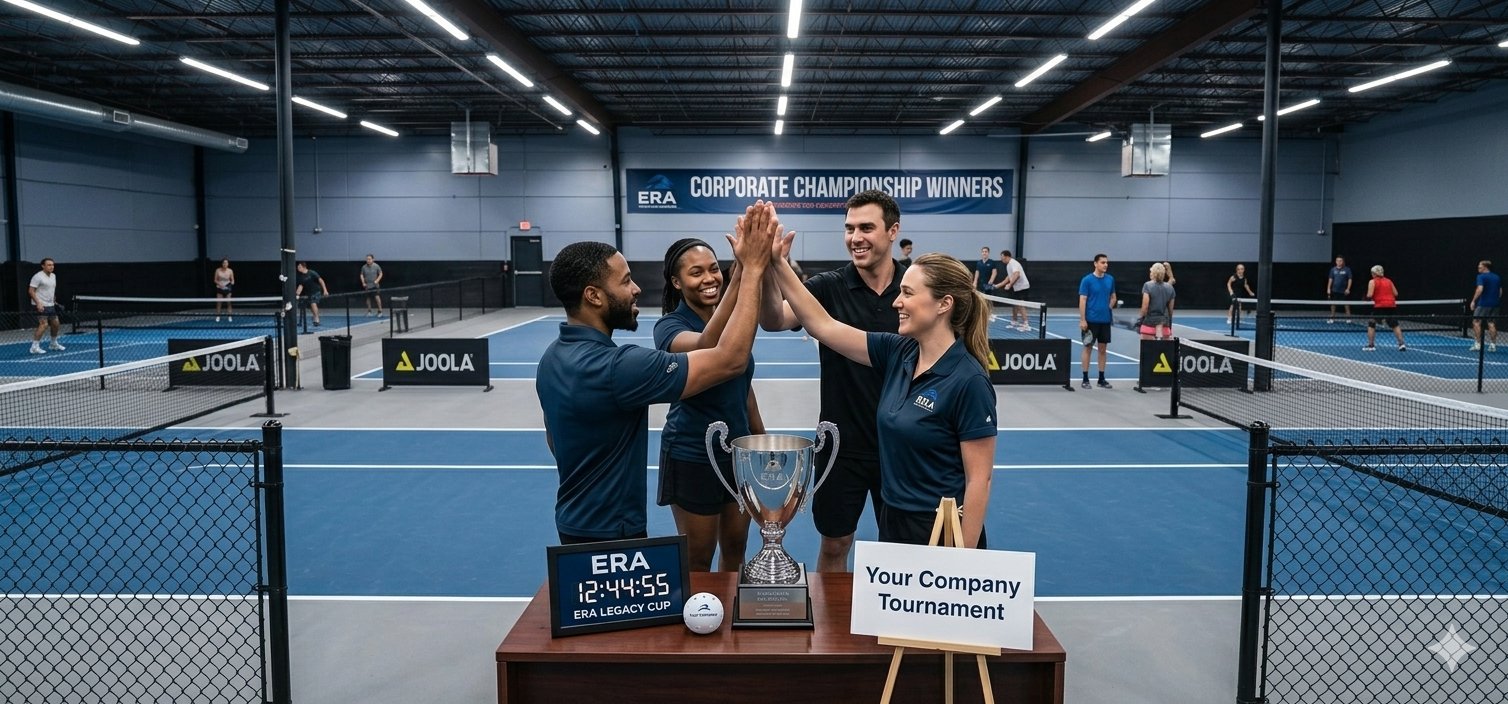
Era Pickleball’s Indoor Courts: A Player’s Review
When I first walked into an Era Pickleball indoor court, the air smelled of varnish, sweat, and new balls—an oddly comforting mix that tells you you’re in the right place. The pace of the game, the sound of paddles kissing the polymer core, and the soft thud of a well-placed dink create a rhythm that is both familiar and new each time you lace up. Era Pickleball has built a reputation on accessible indoor spaces that invite players from every level to practice, compete, and hang out after a session. My aim here is to share a grounded, hands-on perspective drawn from months of weekend sessions and a few weekday evenings when the courts felt more like a community than a facility.
A player’s eye notices a lot of small details before the bigger ones click into place. The layout of Era Pickleball centers matters, and so does how the surface feels underfoot, how the lighting lands on the court lines, and how the scheduling process actually works when you walk through the door with a racquet in hand. In my experience, eras of play are defined not only by the speed of the ball but by the ease with which players can find a level of competition that matches their own. Era Pickleball tends to draw a broad spectrum—from seasoned league players who treat the evenings as a chess match to newer players who come with the enthusiasm of discovering a sport that finally fits their frame and tempo.
What follows is not a glossy brochure but a long-form look at what it’s like to train, court-hop, and ultimately decide whether Era Pickleball’s indoor courts are the right fit for your routine. I’ll cover facilities, staff and culture, the typical session arc, the tangible edges and trade-offs, and a few practical tips that saved my game more than once when I walked into a brand-new location expecting the usual morning jitters. There are no miracles here, only the steady accrual of small improvements and the clarity that comes from showing up consistently.
Facilities and atmosphere
Walk into Era Pickleball and you notice the common thread across locations: clean lines, a layout that emphasizes visibility, and a surface that feels both forgiving and precise. The indoor courts are usually sized to standard pickleball dimensions, with adequate run-off space along the sidelines. The flooring material—often a high-grade sport surface with a slightly cushioned feel—makes a noticeable difference on a long session. The ball, a standard indoor 40 millimeter polyball, travels with a balanced bounce that rewards control more than sheer power. You can play both aggressive and patient styles here, depending on wall placement and what the other players bring to the court.
Lighting is a critical, sometimes overlooked, variable. Era builds its lighting to minimize glare on the court lines while still feeling bright enough to keep the room from feeling claustrophobic. In practice, this means fewer moments of straining to read a serve or a drop shot, which translates into longer rallies and less fatigue in late sets. I’ve played in venues where the lighting created constant eye strain mid-session. Era’s consistent brightness makes it easier to reset after a misread and stick to a deliberate, shot-to-shot plan.
The footprint of the facility also shapes the playing experience. A well-considered indoor space won’t just have a court in a box; it creates a social center around the courts, with a comfortable waiting area, a small pro shop or gear shelf, and enough space for quick warm-up routines before the first point. In several Era locations, you’ll find a practical blend of hard surfaces for quick footwork and a padded area near the entrance for dynamic stretches. Those little zones matter—they’re where your body remembers to warm up the right muscle groups, not just swing aimlessly.
Crowding is the wild card. Indoors, the rhythm of the day has a predictable wave: early afternoon after-work sessions, crowded weekend blocks, and quiet weekday mornings when it feels like you’ve got the place to yourself. Era’s scheduling tends to reflect local demand. On crowded nights, you’ll share a court with players of varied skill levels, which is a strength for learning but also a reminder to protect the ball and respect the flow of points. On slower days, you can test drives of new shots, which is where you see how the facility encourages experimentation without feeling boxed into a single pace.
Coaching and culture
Era Pickleball’s approach to coaching sits somewhere between practical, on-court feedback and a more mentorship-oriented vibe. From my observations, the best coaches here blend the fundamentals with the subtle art of rhythm management. They aren’t just drilling a forehand or a dink; they’re guiding you to read sequences, anticipate your opponent’s intention, and manage your own energy across a two-hour block.
The culture on the court during a typical Era session rewards patience and sharp decision making. The players are generally courteous about line calls, especially in indoor environments where the ball’s bounce can sometimes feel unpredictable if the surface is slightly slick or the court tape has aged. The etiquette matters because it preserves a friendly tone even during tight points. You’ll see a lot of “nice shot” acknowledgments after a rally, which helps create a feedback loop that keeps newer players from feeling singled out or overwhelmed.
What surprised me most in these spaces is how quickly relationships form around shared goals. A few weeks into regular sessions, you’ll notice which players consistently draw you into higher-quality rallies and which ones push your service-returns into more honest, longer exchanges. There’s a natural peer pressure present, not in the scolding sense, but in the shared expectation that you can do better next time. That dynamic fosters steady improvement and a sense that you’re part of something bigger than a single match.
The practical side of the experience
If you’re contemplating an Era location, the practical realities matter as much as the vibe. In my testing, the scheduling workflow was straightforward: book online, show up with your gear, and find your court assignment on a monitor or whiteboard near the entrance. The system is designed to minimize wasted minutes between games, which is essential when you’re chasing a two-hour block with back-to-back sessions.
The gear setup is usually predictable: a container of spare paddles behind the desk, basic grip tapes, and a small rack for water bottles. You’re allowed to bring your own balls, which is a nice option if you’re particular about the ball’s bounce and feel. Some locations also offer a few indoor-friendly balls for practice, which is handy if you’re trying to fine-tune a particular drop or drive.
One recurring trade-off across indoor facilities is temperature control. If the HVAC is aggressive, you’ll enjoy a stable playing environment but might feel cool during longer rest periods. If the room is warm, you’ll appreciate the comfort while pushing through fatigue but may notice the ball’s bounce changing as the air density shifts. Era keeps the climate more or less even, but you’ll still want to layer or adjust your early warm-up to align with how the court starts to feel after the first few games.
Performance-minded players will appreciate the consistency in ball bounce. Indoor play typically eliminates wind as a variable, enabling sharper serves and more controlled kitchen play. But that consistency can also lull you into relying on a few favorite patterns. My best advice is to push yourself to vary your attack—play a few points with careful placement, then switch to a more aggressive pace. That balance keeps you sharp and makes it easier to adapt when you step onto an outdoor court later.
A note on accessibility and inclusivity
Era Pickleball venues tend to be accessible to players with a range of skill levels and physical needs. The layout and the staff’s approach to coaching help new players feel at ease while ensuring advanced players have room to push themselves. If you’re carrying equipment or need a moment to adjust a strap, you’ll usually find someone nearby who can lend a hand or offer guidance. The community orientation is visible in how players cheer each other on after a set ends, and how experienced players take a moment to demonstrate a better approach rather than simply winning a rally.
Beyond the gate
When you leave the court, the experience doesn’t end. There’s often a casual post-session energy that nudges you toward regrouping with your partner or with other members you’ve connected with during the block. Some Era locations push this further with sliding-scale leagues, social play nights, and occasional clinics that feel less like a one-off lesson and more like a compact, practical training session with a built-in accountability structure.
The edges and where the experience could improve
No facility is perfect, especially in a sport that rewards both consistency and improvisation. A few recurring edge cases that have shown up for me during visits to Era indoor courts are worth noting:
First, the noise level can be a factor on busy nights. The combination of hard surfaces and enthusiastic rallies can push ambient sound into the range where calling a point or hearing a teammate requires a little extra attention. It’s not crippling, but it’s real. If you’re someone who drills with audio cues, bring a light pair of earplugs for long sessions or plan a quieter time block for your practice.
Second, the quality of the court tape matters more than you might assume. After a few months of heavy use, tape edges begin to peel and lines lose their crispness. It’s not a safety issue, but it does affect depth perception on soft shots and dinks near the line. The best remedy is to arrive early on a weekend or to ask staff about upcoming maintenance windows. A well-kept court line makes a tangible difference in the accuracy of your drop shots and resets.
Third, the gear inventory varies by location. Some centers stock a few beginners paddles or a handful of spare grips, but you’ll be saving yourself trouble if you bring your own grip size and paddle weight. If you’re looking to test a new paddle, you’ll probably want to schedule a visit during a slower time so you can try a couple of options without rushing.
Fourth, patience is required when you’re trying to join a regular league or a club match. While the onboarding process is generally simple, the best session slots fill quickly. If you’re chasing a specific time, it’s worth signing up for a block in advance and keeping an eye on cancellation windows. The more proactive you are, the easier it becomes to secure steady court time.
Finally, there’s an undeniable value in the social component. No matter how well you stack up technically or how polished your dink is, what ultimately makes Era stand out is the community that forms around the courts. If you’re new to the sport, consider joining a social or beginner-focused session. The familiarity of seeing familiar faces quickly reduces the intimidation factor and accelerates improvement more than any drill alone.
Two practical checklists for quick reference
What to bring for a productive Era indoor session
- Water bottle and towel to stay hydrated and dry
- Comfortable athletic shoes with reliable grip on indoor surfaces
- Your own paddle and grip tape in the size you prefer
- A small bag with ankle supports or ankle tape if you have needs in that area
- A light jacket or warm layer for pre and post-play, plus a basic first aid item like a small bandage
What to observe during a session to maximize learning
- Watch the trajectory of serves and returns to anticipate bounce and depth
- Note which shots you fall back on under pressure and which ones push you into an error
- Track your energy level and adjust your pacing so you don’t burn out in the middle of a set
- Pay attention to court conditions, including lighting and tape, and adjust your timing accordingly
- Seek feedback from higher-skill players who understand the rhythm of the game without breaking your focus
A closing perspective you can take to the next session
If you’re evaluating Era Pickleball for the long haul, bring a notebook to log the small improvements that accumulate over weeks. Write down your success points—the moments when you chose to dink instead of drive, when your footwork found the middle of the court, or when you recovered from a weak return with a smarter transition to the next shot. Those notes become a guide to your future sessions and a measure of whether the indoor courts are gradually elevating your game.
From my side of the net, the stronger seasons of play tend to begin with the same simple decision: show up, warm up, learn, and repeat. Era Pickleball’s indoor courts offer a reliable space for that cycle, a place where your practice routine can stay consistent even as your strategy evolves. The facilities tend to balance the demands of a serious game with the social warmth that makes a gym feel like a second home. If you’re looking for a way to turn a sporadic hobby into a weekly habit, these indoor courts provide a sturdy framework to build on.
If you’re new to the area or simply curious about whether Era Pickleball can become a permanent stop in your schedule, consider a test block that includes a mix of drills, a short match or two, and a casual social night. That combination often reveals more about the culture and the pace of play than any single session might. And if you’re chasing a longer-term commitment, you’ll likely find that the facility is as much a community hub as a sports venue, which, in practice, is a meaningful edge for players who want to keep coming back.
A brief note on outdoor options
Era Pickleball also offers outdoor courts in some markets, which can be a refreshing change of pace. In outdoor play, you’ll face wind, sun, and variable surface conditions that require a different kind of adaptability. If you’ve spent a long stretch indoors, stepping outside for a session with Era can test your ball control in a new way and push your understanding of timing under less predictable conditions. The best approach is to treat outdoor play as a complementary layer to your indoor routine: use it to diversify your practice and to build on the confidence you gain indoors rather than as a replacement learn more for the consistency you establish inside.
Final reflections
If you want a straightforward takeaway: Era Pickleball indoor courts deliver a well-balanced environment that supports growth through steady structure, a welcoming culture, and a play-space that respects the pace of the game. The practical realities line up with what you’d expect from a community-driven facility: clean courts, reliable scheduling, staff who understand the sport, and a social fabric that helps everyone raise their game a little at a time.
In the end, the strength of Era’s indoor courts lies not in any single feature but in the confluence of space, people, and time. The rooms designed for pickleball become arenas for repetition, refinement, and, crucially, confidence. You learn to trust the bounce, to read the opponent’s intentions, and to hold your nerve in a rally that could swing either way. If you’re searching for a place to practice with a straightforward path to improvement while enjoying a supportive community, Era Pickleball’s indoor courts deserve a serious look.